Verified, Inferred, Unknown: What Strategic Patent Work Should Ask of AI

On this page
A client calls on a Friday afternoon. Their biggest competitor holds a European patent that puts a product launch at risk, and the opposition period closes on Monday. Matt Maitland, a UK and European patent attorney and US patent agent, opened the opposition segment of a November 19 session with that scenario.
It is a fair test for AI on strategic patent work, and speed is not the point. On Monday morning someone signs the notice of opposition. Every statement in the grounds then has to survive a reader whose job is to find the weak one.
Strategic work has no fixed shape
Drafting and office action responses follow a structure the profession knows well. Continuation strategy, oppositions and portfolio reviews do not. The inputs sit across file histories, foreign family members, case law, technical standards and whatever is known about a competitor's products. Much of the analysis still ends up in Word documents assembled by hand.
Practitioners have started taking this work to general-purpose chatbots. The problems are predictable. The model does not reach the right sources, and when it does, the answer cannot be traced back to them.
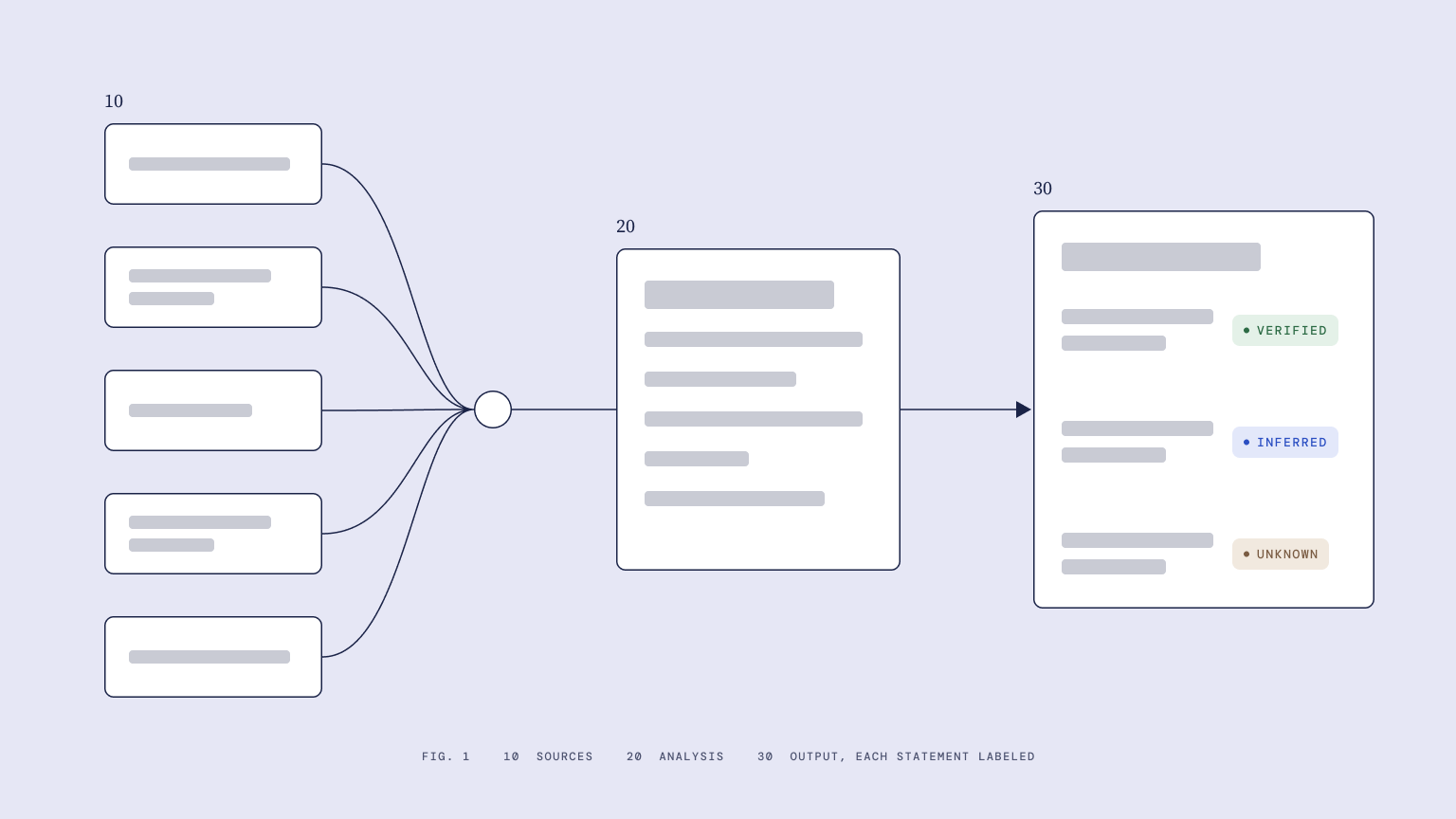
The standard worth holding AI to is narrower than "a good answer". The output should tell you, statement by statement, what is verified from a source you can open, what is inferred, and what is still unknown. Strategic patent work already runs on that distinction. A tool that blends the three into fluent prose makes the work harder to sign, not easier.
Opposition: the grounds have to agree with each other
A credible first pass starts with the art cited against the whole family, including the Chinese, Japanese and US members, then adds a fresh search. A feature-by-feature view across those documents shows quickly which one is the realistic closest prior art for an inventive step attack.
The less visible checks matter as much. Entitlement to priority can be assessed claim feature by claim feature against the priority document pulled from the file history. Added matter needs its own pass, including the trap between Article 123(2) and Article 123(3) EPC, where amending a claim can cure one objection only to run into the other. Oppositions regularly turn on it.
Then comes the check a senior reviewer would make. The skilled person cannot have one level of skill for sufficiency and another for inventive step. A single claim construction has to hold across the whole statement of grounds. Flagging conflicts between attacks before filing is where the hours go, and where a first pass earns its place.
The search itself should stay auditable. If the log shows a strategy that is too narrow, the practitioner asks for broader terminology or a wider classification and runs it again.
Portfolio review: count what the competitor actually owns
Comparing two portfolios by assignee name undercounts. Acquisitions move patents into group companies, so the first useful step is to ask which acquired entities belong in scope.
IPC and CPC codes are precise but opaque to most readers of a portfolio review. A classification built for the two portfolios at hand shows, in terms a business owner understands, where each company files and how that changed year by year.
Mapping a portfolio onto a competitor's products is where honesty about evidence matters most. Public information gets an analysis started. Teardown reports and internal competitive intelligence make it much better. Either way, the output should mark the data gaps and propose a test for each claim element it could not verify. A confident map that hides its gaps is worse than no map, because someone will act on it.
Continuation: check the family before filing into it
On a large US family, the first difficulty is seeing it. An interactive family tree that shows each member's status, a summary of its claims and the verbatim independent claims replaces opening each case one by one. Shared with the client before a call, it puts both sides on the same materials.
The first strategic question is whether a new filing is needed at all. Before drafting toward a product, check whether an existing family member already reads on it. If one does, the answer may be enforcement, not another continuation.
When drafting does make sense, two tables carry the work. One shows the support for each claim feature in the root application, linked to the passage. The other maps each feature onto the product and labels it verified, inferred or unknown, with a proposed test wherever the evidence stops.
Three questions before trusting an output
Can I open the passage behind each statement in one click? Does the output say what it inferred and what it does not know? Can I see how it searched, and change that?
None of this moves the signature away from the practitioner. It changes what the practitioner reviews: not a draft to rewrite, but a trail to check. On work the other side will read line by line, that difference decides whether the first pass saves the weekend or costs it.
See the three workflows on screen
In the November 19 session, Matt Maitland runs a first-pass EPO opposition, a competitor portfolio comparison and a US continuation analysis in Patent Chat, with every statement linked to its source.
See the three workflows on screen.
Watch the sessionThis article covers practice and tooling. It is not legal advice.
See DeepIP in your own prosecution workflow.