AI Office Action: How Artificial Intelligence Is Transforming USPTO Rejection Response in 2026
.png)

AI office action tools are moving from experimental add-ons to core infrastructure in patent prosecution.
For years, office action responses have required a painstaking reconstruction of examiner reasoning: parsing statutory grounds, mapping cited references to claim elements, testing obviousness combinations, and carefully calibrating amendments. Even experienced practitioners often spend more time rebuilding the structure of the rejection than crafting the strategic response itself.
In 2026, AI office action software is beginning to change that dynamic. The shift is not about automating legal judgment. It is about structuring rejection analysis so attorneys can focus on strategy instead of manual decomposition.
The result is a quieter but more consequential transformation of patent prosecution.
Why Office Actions Remain the Pressure Point in Prosecution
While AI patent drafting tools have improved the preparation of patent applications, office action response remains the most reasoning-intensive phase of prosecution.
Each rejection demands that the attorney:
- Identify the statutory basis (101, 102, 103, 112)
- Analyze how each claim limitation is allegedly disclosed
- Evaluate whether cited passages genuinely support examiner mappings
- Assess motivation-to-combine logic in obviousness rejections
- Determine whether amendment or argument is the stronger path
This is adversarial legal reasoning, not content generation.
And it is precisely here that AI office action systems are gaining traction.
What AI Office Action Software Actually Does
The term “AI office action” is often misunderstood. It does not mean pressing a button and filing an automated response.
Modern AI office action software focuses on structured analytical support. In practical terms, it is designed to:
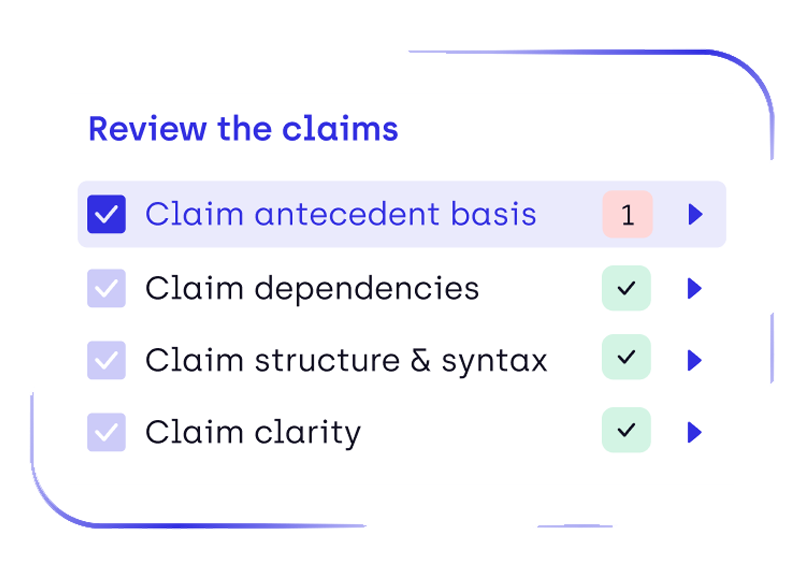
- Parse the office action into machine-readable rejection components
- Extract and organize examiner claim mappings
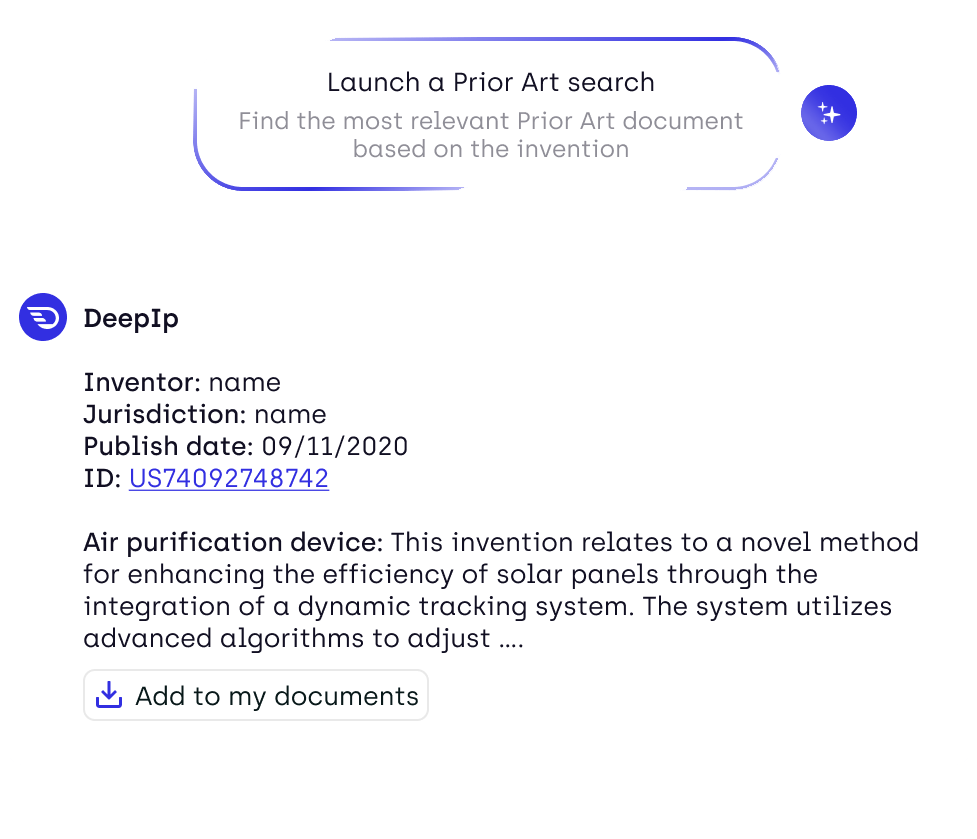
- Identify cited passages in prior art
- Compare references directly against claim language
- Surface logical gaps or weak mappings
- Assist in organizing a legally coherent response
The emphasis is analytical rigor, not just drafting speed.
DeepIP’s Patent Prosecution module, for example, is built to operate within a broader AI patent workflow, integrating rejection analysis with prior art search, drafting tools, and patentability intelligence. That integration is increasingly what differentiates sophisticated platforms from standalone generative tools.
From Narrative Text to Structured Rejection Logic
Traditionally, office actions arrive as dense narrative documents. The first task for any practitioner is to translate that narrative into a structured framework:
- What is being rejected?
- On what statutory ground?
- Where exactly is each limitation mapped?
- What combination rationale is asserted?
AI office action systems accelerate this translation phase.
Instead of manually recreating claim charts or re-reading lengthy references to locate cited passages, the system identifies and extracts these elements automatically. This does not eliminate attorney review, but it reduces the time spent on mechanical reconstruction.
The difference may seem incremental. In practice, it compounds across dozens or hundreds of responses.
Where Time Is Actually Saved
There is skepticism in the market about whether AI meaningfully reduces prosecution time. The reality is nuanced.
The greatest efficiency gains typically occur in three areas:
- Rejection parsing: Automatically structuring statutory grounds and claim mappings.
- Reference verification: Locating and comparing cited passages against specific claim elements.
- Argument organization: Producing a logically structured framework for response drafting.
The savings are less about auto-writing arguments and more about accelerating the analytical groundwork that precedes them.
In high-volume practices, even modest reductions per response can materially impact profitability and turnaround time.
The Strategic Layer: Amendment Sensitivity and Risk
One of the most under-appreciated risks in office action response is unintended scope collapse.
Amendments introduced to overcome a rejection may:
- Narrow claim scope more than necessary
- Create estoppel risk
- Undermine continuation strategy
- Introduce inconsistencies with earlier arguments
More advanced AI office action tools are beginning to evaluate amendments not only for immediate rejection resolution, but also for broader strategic impact. By connecting rejection analysis with specification support and prior art intelligence, these systems can flag potential vulnerabilities before they become embedded in the file history.
This is where structured AI review moves beyond convenience and into risk management.
AI Office Action in Life Sciences and Complex Technologies
The analytical burden intensifies in life sciences and chemistry. Office actions in these fields often hinge on:
- Structural similarity rather than identical disclosure
- Functional claim interpretation
- Experimental data comparison
- Sequence overlap and homology arguments
Here, AI office action software is most effective when integrated with structure-aware and semantic search capabilities. A platform that can parse chemical structures or analyze sequence-based prior art will provide far more meaningful rejection analysis than a general-purpose text model.
For pharma and biotech prosecution, this integration reduces the likelihood of overlooking subtle but commercially significant distinctions.
What to Look for in AI Office Action Platforms
Not all AI tools labeled “office action” deliver the same depth of analysis. When evaluating solutions, IP leaders typically focus on:
- Structured rejection parsing, rather than simple summarization
- Direct claim-to-reference mapping validation
- Integration with prior art search tools
- Amendment impact analysis
- Enterprise-grade data governance
Equally important is workflow integration. AI office action functionality that operates in isolation may save time locally but create friction elsewhere. Systems that connect drafting, search, and response logic create cumulative efficiency.
DeepIP’s approach is built around this integrated model, positioning AI office action analysis as one component of a unified prosecution intelligence platform rather than a standalone drafting utility.
How DeepIP’s AI Office Action Module Applies These Principles
Against this backdrop, DeepIP’s AI Office Action module was developed to address precisely the analytical bottlenecks that define modern prosecution.
Rather than positioning AI as a drafting shortcut, the module focuses on structured rejection intelligence and workflow integration. It operates within DeepIP’s broader AI patent environment, meaning rejection analysis is not isolated from prior art search, specification review, or drafting context.
Three core capabilities define the system.
1. Intelligent Rejection Analysis
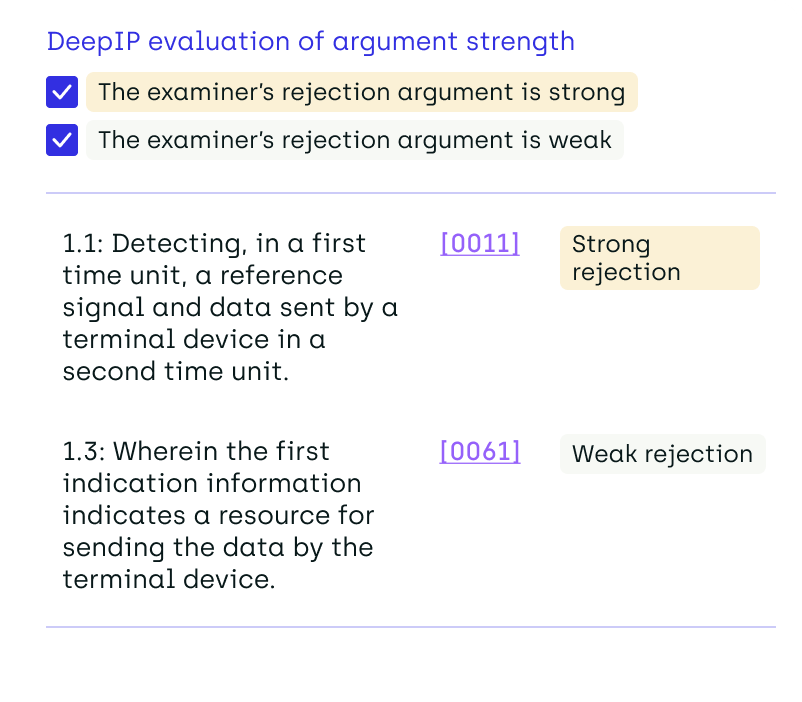
At its foundation, the module provides structured insight into the validity and logic of examiner rejections. Instead of forcing practitioners to manually reconstruct mapping logic, the system highlights:
- The statutory grounds at issue
- How each claim limitation is treated
- Where cited references allegedly disclose specific elements
- Potential gaps or weaknesses in examiner reasoning
The goal is not to override attorney judgment, but to focus attention where it is strategically most valuable.
2. Efficient Reference Verification
Reference review is often the most time-consuming part of office action response, particularly when examiners cite lengthy or technically dense documents.
DeepIP’s module accelerates this phase by surfacing cited passages and enabling rapid cross-comparison with claim language. This reduces manual searching and shortens the time between rejection receipt and strategic evaluation.
In high-volume environments, even incremental efficiency gains at this stage can meaningfully impact response timelines.
3. Smart AI Drafting Assistance
Once rejection analysis is structured, the system assists with response drafting. Rather than producing generic text, it helps organize arguments in a way that aligns with statutory clarity and claim logic.
Attorneys retain full control, but the drafting process becomes more structured, reducing the risk of inconsistency or overlooked support.

Practitioner Feedback
DeepIP users report that the impact is less about automation and more about analytical reinforcement.
As one prominent IP attorney noted, “DeepIP’s module has not only sped up our response times but also enhanced the quality of our submissions. It’s like having a seasoned colleague who’s always available to point out the best approach.”
This framing is consistent with how many firms are approaching AI office action tools in 2026: not as replacements for practitioners, but as structured reasoning support systems embedded within prosecution workflows.
The Broader Evolution of AI in Patent Prosecution
The first wave of AI in patent law emphasized generative drafting. It focused on accelerating the creation of specifications and claims.
The current wave is more analytical. AI office action systems are designed to strengthen legal reasoning by structuring rejection analysis and surfacing logical weaknesses before arguments are finalized.
This reflects a broader industry shift: from document automation to prosecution intelligence.
For law firms and in-house counsel managing complex portfolios, that distinction matters. Office action response is not just a procedural step. It shapes claim scope, enforceability, and long-term portfolio value.
Conclusion
AI office action tools are not redefining patent law. They are redefining how efficiently and consistently attorneys engage with examiner reasoning.
By transforming narrative rejections into structured analytical frameworks, AI office action software allows practitioners to devote more time to strategic thinking and less to mechanical reconstruction. In an environment of increasing complexity and cost pressure, that shift is significant.
As patent prosecution becomes more data-driven and integrated, AI office action analysis is moving from optional enhancement to foundational capability.
FAQ: AI Office Action

What is AI office action software?
AI office action software analyzes USPTO rejections, structures examiner reasoning, compares cited references to claim elements, and assists attorneys in drafting coherent, strategically aligned responses.
Can AI automatically respond to USPTO office actions?
No. AI provides structured analytical support and drafting assistance, but legal strategy and final decision-making remain the responsibility of qualified practitioners.
How does AI office action technology reduce prosecution time?
Primarily by automating rejection parsing, accelerating prior art verification, and organizing argument frameworks—reducing repetitive manual analysis.
Is AI office action software suitable for biotech and chemistry patents?
Advanced platforms that integrate semantic and structure-aware search are particularly valuable in life sciences, where rejections often hinge on nuanced structural or functional distinctions.
.png)