Best AI Patent Drafting Tools in 2026
.png)

Patent drafting has always been a demanding, time-intensive process—requiring precision, deep technical understanding, and hours of detailed claim writing and prior art analysis. In 2026, AI patent drafting tools are transforming that reality.
Patent attorneys, agents, and corporate IP teams now rely on AI-powered platforms to streamline workflows, accelerate preparation, and maintain high quality under mounting pressure. The new generation of tools goes beyond claim suggestions—offering real-time editing, jurisdiction-specific compliance, and automated formatting.
This article ranks the best AI patent drafting tools in 2026 based on features that matter most to law firms and legal teams. Whether you manage complex global filings or are exploring your first GenAI platform, this guide offers a side-by-side view of today’s most advanced solutions.
Why AI Is Now Essential for Patent Professionals
The pressure on patent teams has never been higher. Patent professionals are being asked to do more with less—draft faster, reduce rejections, adapt to evolving technologies, and support global filings across diverse jurisdictions. The traditional drafting model is reaching its breaking point.
Time-intensive drafting
Preparing a single patent application can consume anywhere from 40 to 100+ hours—especially for complex inventions in biotech, software, or engineering. That workload scales exponentially for firms managing hundreds of filings per year.
Severe talent shortages
Law firms and corporate in-house counsel alike are facing hiring bottlenecks. The number of patent professionals entering the field is not keeping pace with demand, leaving teams stretched thin and over-reliant on senior attorneys.
Filing volume & backlog
Global patent applications hit 3.7 million in 2024, and national offices—like the USPTO, EPO, and CNIPA—are struggling to keep up, leading to longer wait times, stricter scrutiny, and more procedural hurdles.
Rejection rates & quality risks
According to USPTO data, 90% of patent applications receive a non-final rejection. Many of these stem from inconsistent claim scope, antecedent basis errors, or specification gaps—issues AI can help flag or prevent.
Bottom line: AI patent drafting tools are critical to get ahead
In response, AI patent drafting tools are becoming essential infrastructure—not just efficiency upgrades. They help teams:
- Reduce time-to-draft by up to 50%, especially on repeatable tasks like writing backgrounds & summaries, extracting & defining critical terms, describing embodiments, and generating variable-driven boilerplate paragraphs.
- Ensure jurisdictional compliance, with models tuned to USPTO, EPO, PCT, and other office requirements.
- Augment attorney judgment, surfacing potential errors, missing support, or inconsistent dependencies before submission.
- Enable scalable, high-quality output even as workloads grow and staffing constraints tighten.
This is especially critical in life sciences, chemistry, and high-complexity sectors, where drafts must meet both technical and legal standards. AI doesn’t replace attorney expertise—it multiplies it, making it possible to maintain quality at scale.
How We Evaluated the Top Tools
Who This Comparison Is Most Useful For
This guide is designed for patent law firms and in-house IP teams evaluating AI for production-grade patent drafting. Teams seeking lightweight experimentation tools or occasional drafting assistance may find simpler platforms sufficient, while organizations handling high volumes or complex subject matter will benefit most from structured, enterprise-ready solutions.
Our method
To help law firms, corporate IP teams, and innovation-driven organizations choose the right solution, we evaluated each AI patent drafting tool across six dimensions that matter most in practice.
1. Draft Quality & Accuracy
Does the tool consistently produce attorney-grade outputs?
We evaluated how well each system generates compliant claims, modular specifications, and complete disclosures—with special attention to legal structure, technical precision, and adaptation to varying jurisdictions.
2. Workflow Efficiency & Integration
How easily can the tool plug into an attorney’s daily workflow?
We assessed compatibility with Microsoft Word, USPTO formatting, internal templates, and whether the tool supports iterative drafting, collaborative editing, or modular export options.
3. Security & Compliance
Patent data is highly sensitive.
We prioritized tools offering enterprise-grade security, including SOC 2 Type II, ISO 27001, GDPR compliance, encryption at rest/in transit, and zero data retention policies that guarantee client data is never used to retrain models.
4. User Experience & Customization
We considered usability across different experience levels, from junior agents to senior partners.
Platforms scored higher for intuitive interfaces, quick adoption curves, customizable templates, and AI that learns from a firm’s style, tone, and preferences.
5. AI Technology & Innovation
This measures how advanced the underlying AI is—and how well it keeps pace with new legal standards, jurisdictional rules, and model capabilities.
We rewarded platforms that use state-of-the-art language models, domain-specific tuning, and continual product innovation.
6. Deployment Flexibility
Security-conscious organizations often need control over data hosting.
Tools that offer flexible deployment—whether cloud, hybrid, or fully on-premise—scored highest, as did those with integrations inside private environments (e.g. Microsoft Word add-ins vs. browser-based tools).
Comparison: Patent Drafting Tools in 2026
To help patent professionals quickly assess which tools best match their operational needs, we’ve summarized how each platform performs across six key categories: draft quality & accuracy, workflow efficiency & integration, security & compliance, user experience & customization, AI technology & innovation, and deployment flexibility.
The table below provides a visual side-by-side comparison based on publicly available features, technical documentation, and verified product capabilities as of late 2025.
These assessments reflect independent analysis based on each tool’s documentation and product behavior—not marketing claims. While feature sets continue to evolve, the core capabilities below offer a snapshot of how each platform currently serves legal and IP teams.
The analysis reflects hands-on evaluation of each platform’s documented features, typical enterprise configurations, and observed workflow behavior in legal drafting contexts.This comparison focuses on production-grade patent drafting use cases. Tools may offer additional value outside drafting workflows.
Top AI Patent Drafting Tools in 2026
In 2026, a new wave of AI patent drafting software is helping patent attorneys and IP teams draft applications faster and with greater precision. Below we review the leading AI-driven patent drafting tools, highlighting their capabilities and how they stack up for patent professionals.
1. DeepIP
Overview
DeepIP stands out as a leading AI patent drafting platform in 2026, offering enterprise-grade capabilities for legal teams and corporate IP departments.
This best-in-class patent drafting software combines precision drafting with broad jurisdictional coverage, seamless Microsoft Word integration, and uncompromising security measures. Its proprietary GenAI models are fine-tuned for patent law, producing enforceable, attorney-quality output tailored to each user’s style and jurisdiction.
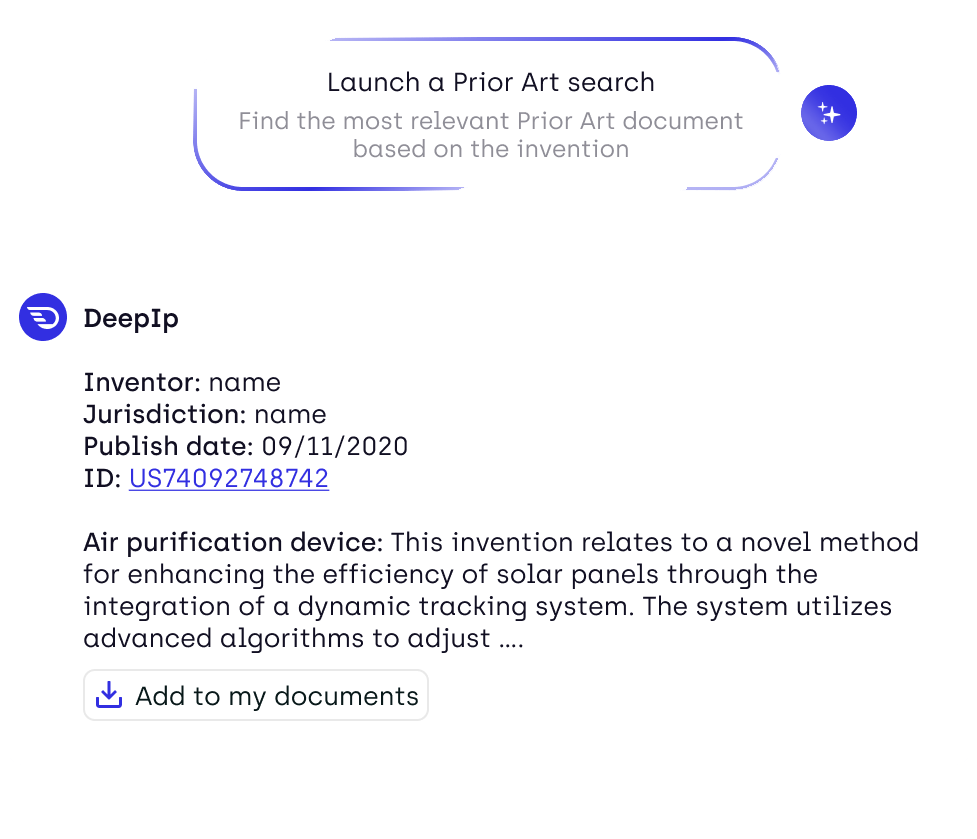
DeepIP supports multi-office filings (USPTO, EPO, CNIPA, PCT, KIPO, and more) by adapting language and format to each jurisdiction’s standards. Unlike browser-based tools, DeepIP runs natively as a Microsoft Word add-in, letting attorneys draft, edit, and validate patent applications within the familiar Word interface.
Capabilities and Limitations
DeepIP is the only patent drafting solution offering both cloud-based and on-premise deployment options, backed by enterprise security (SOC 2 Type II, ISO 27001, GDPR compliance) and a strict zero data retention policy that ensures client data is never used for AI training.
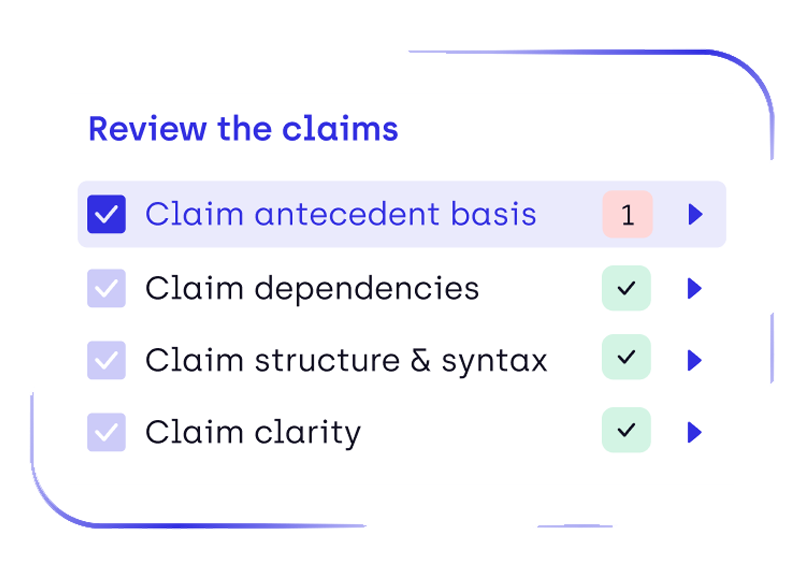
Its workflow-centric design includes modular drafting capabilities—allowing users to generate specific sections (claims, abstract, background, etc.) with granular control—and real-time proofreading that flags antecedent basis issues, claim inconsistencies, and other errors as you write.
DeepIP’s AI actively learns from a firm’s preferred writing style and templates, so drafts align with the tone and format that attorneys expect. It also offers one-click export to multiple formats and collaboration features for large teams, making it ideal for complex, high-volume patent drafting at scale.
Key Features
- Style-matching AI: Learns the firm’s tone, template conventions, and jurisdictional nuances to draft in a consistent style.
- Microsoft Word Integration: Runs entirely inside Word with real-time AI suggestions and validation, streamlining the drafting workflow.
- Multi-jurisdiction Support: Adapts content for USPTO, EPO, CNIPA, KIPO, PCT, DPMA, UKIPO and other patent offices to ensure compliance with each jurisdiction’s rules.
- Modular Outputs: Allows generation of specific document sections or paragraphs with fine-grained control, so attorneys can refine one part of the application without regenerating the whole draft.
- Enterprise-Grade Security: Provides SOC 2 Type II and ISO 27001 certified data security, encryption in transit and at rest, and flexible deployment (cloud or on-premises) with zero client data used for AI training.
Verdict
DeepIP combines broad industry adaptability with the precision needed for highly regulated sectors. Its structure-first architecture and agentic review layer support drafting across domains—from AI and semiconductors to clean tech, medical devices, and life sciences.
While it excels in complex fields like chemistry and biotech—where accuracy, disclosure alignment, and auditability are critical—it’s equally effective for generalist patent teams and high-volume corporate filings. DeepIP is engineered for organizations that value quality, defensibility, and secure drafting workflows over generic speed.
More than a drafting tool, DeepIP is a unified platform that supports the full patent lifecycle—from idea to enforcement. Its expanding ecosystem helps legal teams centralize IP workflows, reduce tool fragmentation, and manage patent quality at scale—all in one secure environment.
2. Solve Intelligence

Overview
Solve Intelligence is an AI-powered patent drafting platform focused on automating portions of the drafting and prosecution process. It assists with tasks like initial draft generation, office action responses, and even some jurisdiction-specific claim formatting through a convenient web-based interface. Solve leverages pre-trained large language models to generate patent content, making it a useful patent automation tool for speeding up routine tasks in patent preparation.
Capabilities and Limitations
Solve offers flexibility for fast iteration and browser-based access. However, its workflow is centered on a cloud-based interface and does not include native Microsoft Word integration—meaning real-time editing, template reuse, and document validation must occur outside the platform. Deployment options are limited to the cloud, with no on-premise availability, which may be a consideration for teams with stricter infrastructure or compliance requirements.
Solve states that it does not retain user data or use it for model training, and it adheres to confidentiality standards expected in legal settings. As with any AI-enabled platform, firms should review its deployment and compliance capabilities against their internal IT and governance requirements.
Verdict
Solve Intelligence is a capable platform for automating targeted drafting and prosecution workflows. For lean teams seeking speed and accessibility in a browser-based environment, it offers strong baseline functionality. Compared to platforms like DeepIP, which offer native Word integration, modular editing, and customizable deployment options, Solve is less focused on full-process lifecycle integration—making it more suitable for isolated use cases than complex, enterprise-wide drafting ecosystems.
3. IP Author by Dolcera
Overview
IP Author (by Dolcera) is an AI patent writing software designed to assist with drafting patent specifications and some prosecution support. It uses an underlying ChatGPT-based engine to generate patent text, often starting with provisional applications or initial drafts. The tool is accessible via a cloud interface and provides quick content generation for patent descriptions and claims, aiming to help patent agents produce a first draft more efficiently.
Capabilities and Limitations
IP Author’s strength lies in jump-starting early-stage patent documents, but it offers limited customization and integration for advanced use.
The platform does not integrate with Microsoft Word, so users must copy outputs from the web interface into their documents manually. It also lacks adaptive learning or style-tuning—the AI does not learn from a firm’s past filings or templates. Real-time compliance checks (for things like claim numbering, antecedent basis, or USPTO rules) are not part of the offering.
Due to these limitations, IP Author is less suited for high-volume or high-stakes patent operations where consistency and compliance are critical. It serves best as a quick drafting aide for simpler cases or preliminary drafts.
Verdict
IP Author by Dolcera is useful for lightweight patent drafting needs, especially to get a quick first draft of a patent application. However, it lacks the robust features and customizations needed for complex, high-stakes patent filings in large-scale operations.
4. Rowan Patents

Overview
Rowan Patents takes a unique visual-first approach to patent drafting automation. The platform includes tools for creating patent figures and drawings, alongside a drag-and-drop style interface for assembling patent applications. It emphasizes compliance with USPTO formatting requirements and offers predictive analytics to guide users (for example, suggesting likely classifications or flagging potential issues) during drafting. This focus on visual document structuring can help ensure that a patent application’s drawings and descriptions stay aligned.
Capabilities and Limitations
Rowan provides strong support for drafting the visual and structural elements of patent applications, but it is less advanced on the purely textual AI front.
The software does not integrate with Microsoft Word; drafting is done in its own interface. It also lacks AI-driven adaptation for different jurisdictions—its compliance features are primarily centered on USPTO rules, with no equivalent tuning for EPO, PCT, or other offices. Customization options for firm-specific templates or style are limited, and the platform doesn’t learn from past filings.
While Rowan’s tools are helpful for ensuring a well-structured application (especially with drawings), it doesn’t offer the same level of AI-generated content or interactive drafting assistance as some competitors.
Verdict
Rowan Patents delivers strong visual drafting support and ensures USPTO compliance in formatting, making it handy for creating well-structured applications with drawings. However, it is limited in AI-driven writing capabilities and lacks the adaptive features and integrations needed for enterprise-scale patent drafting.
5. Qatent by Questel
Overview
Qatent is an AI drafting feature offered by Questel, a provider of IP management solutions. It can generate patent content—such as claims or sections of a specification—using AI to assist drafters. Qatent’s aim is to speed up drafting by providing suggested text, but details on its inner workings and scope are limited from public documentation.
Capabilities and Limitations
As part of a larger IP suite, Qatent provides only basic AI assistance and does not yet match the functionality of dedicated patent drafting software.
It does not integrate with Word or common drafting tools, and users must work within Questel’s platform. The tool currently lacks advanced settings for firm-specific style adaptation, meaning it cannot learn or mimic a particular attorney’s drafting style. Security and deployment flexibility are minimal—Qatent is a cloud offering with no on-premise option, and it does not advertise any zero data retention policy (client data might be stored or processed in Questel’s cloud).
In practice, Qatent may help generate simple claim sets or summaries, but users often need to heavily edit and review its output. It’s best seen as a supplementary aid rather than a standalone drafting solution.
Verdict
Qatent (Questel) provides a basic level of AI-generated patent text suitable for experimentation and speeding up minor drafting tasks. However, it is a minimal viable solution in this space—lacking the features, integrations, and assurances needed for full production use in demanding patent environments.
6. Edge
Overview
Edge is a cloud-based patent drafting tool that leverages AI to assist with writing patent applications and patent drawing generation. It offers a web interface where users can input invention details and receive draft content in return. Edge also includes some template-based automation to maintain consistent formatting, and it can produce simple patent drawings or flowcharts from descriptions, which is a unique feature among some drafting tools.
Capabilities and Limitations
As a lightweight, cloud-only platform, Edge provides a quick way to produce a draft but comes with notable limitations.
It does not integrate with Microsoft Word or other local software—all drafting happens online. While it can generate figures and basic text, it lacks advanced compliance support; for example, it won’t thoroughly check for legal issues like antecedent basis or claim clarity in real time. Secure deployment options are not available (no on-premise or private cloud deployments), so users must be comfortable with their data in Edge’s cloud.
Additionally, Edge’s AI is relatively limited in scope compared to leading platforms—it can handle straightforward patent documents but may struggle with highly technical or complex applications that require nuanced AI understanding.
Verdict
Edge is a useful AI patent drafting tool for rapidly producing simple patent drafts and accompanying figures in the cloud. Its ease of use and figure-generation capability can help with basic patent documentation needs. However, Edge’s limited AI depth and lack of enterprise security options mean it is not well suited for complex patent cases or sensitive data managed by large IP firms.
Feature Comparison: Leading AI Patent Drafting Tools
The table below compares key features and capabilities of the above AI patent drafting tools side-by-side, to illustrate how they differ in integration, security, and functionality.
The comparison reflects publicly documented capabilities and typical enterprise configurations. Feature availability may vary based on deployment model and customer setup.
Why DeepIP Aligns with Complex Patent Workflows
DeepIP performs particularly well in high-volume and technically complex patent environments, including life sciences and chemistry, where drafting accuracy, disclosure alignment, and governance requirements are elevated. Its structure-first approach supports complex claim logic and jurisdictional variation, while remaining flexible enough to adapt to different technologies, drafting styles, and organizational workflows.
Beyond drafting, DeepIP is designed to operate across the broader patent lifecycle, with capabilities ranging from patentability and portfolio intelligence, to prosecution, FTO, invalidity, and more.
This breadth makes it a practical choice for teams seeking consistency and scalability across global operations—especially where complexity and volume amplify the cost of drafting errors, but not at the expense of adaptability to other domains.
FAQ: AI Patent Drafting Tools in 2026

What are AI patent drafting tools?
AI patent drafting tools are software platforms that use artificial intelligence to assist patent attorneys, agents, and in-house IP teams in preparing patent applications. These tools can generate claim drafts, structure specifications, suggest embodiments, check internal consistency, and sometimes integrate prior art analysis.
Modern AI drafting tools range from general-purpose large language model (LLM) assistants to domain-specific platforms designed specifically for patent workflows.
How do AI patent drafting tools work?
Most AI patent drafting tools rely on large language models (LLMs) trained to generate structured legal text. More advanced platforms go beyond text generation by incorporating:
- Claim-logic structuring
- Dependency tracking between claims and description
- Terminology consistency checks
- Markush-aware drafting (for chemical claims)
- Integrated prior art or patentability insights
The most reliable tools treat drafting as a structured workflow rather than a simple text-generation task.
Are AI patent drafting tools reliable in 2025?
AI patent drafting tools can significantly improve drafting speed and efficiency—but reliability depends heavily on the platform’s architecture.
Language-first tools may produce fluent drafts but can introduce subtle risks such as:
- Unsupported claim breadth
- Terminology inconsistencies
- Structural gaps between claims and description
- Hallucinated technical details
More advanced, domain-specific tools incorporate validation layers and structured drafting workflows to reduce these risks. Regardless of the tool, human attorney oversight remains essential.
Can AI draft a complete patent application?
AI tools can generate strong first drafts of patent claims and specifications, especially when provided with structured invention disclosures or technical documentation.
However, AI-generated drafts should always be reviewed and refined by a qualified patent professional. AI accelerates drafting—it does not replace legal judgment, strategic claim scope decisions, or jurisdiction-specific compliance review.
In practice, many firms use AI to produce first drafts and then rely on attorneys for review, refinement, and final approval.
What should law firms look for when choosing an AI patent drafting tool?
When evaluating AI patent drafting software, law firms and corporate IP teams should prioritize:
- Structured claim-generation workflows (not just text output)
- Support for claim dependencies and internal consistency
- Integration with prior art or patentability tools
- Strong data security and enterprise compliance standards
- Clear auditability and transparency of AI outputs
- Ease of integration into existing drafting processes
Speed alone should not be the primary selection criterion—drafting accuracy and structural reliability matter far more.
Are AI patent drafting tools secure?
Enterprise-grade AI patent drafting platforms are designed with security in mind, including:
- Encrypted data storage
- Strict access controls
- Private model environments
- Compliance with enterprise security standards
However, not all AI tools offer the same level of protection. IP teams should ensure that confidential invention data is not exposed to public or consumer-grade AI systems.
Do AI patent drafting tools work for chemistry and biotech inventions?
Chemistry and biotech drafting present unique challenges due to structural logic, Markush claims, sequence accuracy, and disclosure support requirements.
General-purpose AI drafting tools may struggle with chemical validity and structural precision. Domain-specific platforms built with structured validation workflows are better suited for these fields.
For high-complexity inventions, AI should support—not replace—expert technical and legal review.
Will AI replace patent attorneys?
No. AI patent drafting tools are designed to assist attorneys, not replace them.
AI can automate repetitive drafting tasks, improve consistency, and accelerate first drafts. But strategic claim scope decisions, inventive step positioning, prosecution strategy, and legal judgment remain human responsibilities.
In 2025, the competitive advantage lies in attorneys who effectively leverage AI—not in eliminating the attorney altogether.
How much time can AI save in patent drafting?
Time savings vary depending on the complexity of the invention and the tool used. Many firms report:
- Faster first-draft generation
- Reduced back-and-forth revisions
- Improved drafting consistency
- Quicker internal review cycles
AI often shifts attorney time from formatting and structuring tasks toward higher-value strategic analysis.
What is the difference between general AI writing tools and AI patent drafting software?
General AI writing tools focus on language generation. They are optimized for fluency and readability.
AI patent drafting software is designed specifically for patent workflows and may include:
- Claim-structure logic
- Technical terminology control
- Patent-style formatting
- Integration with search and prosecution workflows
- Structured review layers
For professional use, specialized patent AI tools typically provide stronger reliability and workflow integration.
What are the best AI patent drafting tools in 2026?
The best AI patent drafting tools in 2026 vary depending on use case, technical field, and workflow needs.
Some platforms focus on fast text generation, while others emphasize structured drafting, lifecycle integration, and validation layers. Law firms and corporate IP teams should evaluate tools based on reliability, integration, and long-term workflow continuity—not just speed or marketing claims.
.png)