How Modern Corporate IP Teams Use AI in 2026: From Innovation Harvesting to Patentability, Drafting, Prosecution, and Portfolio Pruning

Why Corporate IP Functions Are Changing—and Why AI Is Now Essential Infrastructure
The IP landscape is evolving fast. As R&D pipelines accelerate, in-house IP teams are struggling to keep pace with invention disclosure volume, global filings, and growing maintenance burdens—especially in life sciences, chemistry, and biotech.
Simultaneously, advances in AI are reshaping how corporations capture, analyze, and protect innovation. Increasingly, both digitally native companies and large R&D organizations view AI not as an optional add-on, but as core infrastructure for scalable IP operations.
One recent analysis noted that “AI-based technologies are increasingly revolutionizing how we manage, maintain, and capture IP” across multiple functions.
DeepIP’s trajectory is reflective of this new era. In 2025, DeepIP raised $15 million in Series A funding to “modernize the outdated patent filing process,” citing a growing need for efficiency and quality across the global IP ecosystem. That year, the platform supported 12,000 patent drafts, 11,000 office action responses, and served 200% more IP professionals than in 2024.
As Tom Tassignon, Head of IP at Philips, explained during a recent webinar discussing their use of DeepIP: “We think these tools are becoming an indispensable part of the patent attorney’s toolkit. They allow us to be much more efficient and also deliver higher-quality work—across drafting, novelty analysis, intelligence, and prosecution.”
This article breaks down how corporate IP teams are using AI across the full IP lifecycle in 2026, with real DeepIP examples and actionable lessons for companies in innovation-intensive fields.
1. AI-Enhanced Invention Harvesting: Stopping Innovation Leakage Before It Happens
Traditional invention harvesting systems—manual submissions, inconsistent inventor engagement, ad-hoc discussions—let valuable ideas slip through the cracks. As organizations scale, this “invention leakage” becomes a strategic risk.
AI-driven invention harvesting tools address this by parsing internal R&D documentation, including research reports, experimental notes, engineering records, technical PDFs, and product development materials. These systems flag potentially patentable concepts before they reach disclosure meetings.
AI helps IP teams:
- Detect hidden inventions in dense technical documentation
- Auto-generate structured invention disclosure drafts
- Surface cross-project themes or emerging clusters
- Reduce dependence on manual inventor submissions
- Establish an auditable, repeatable intake pipeline
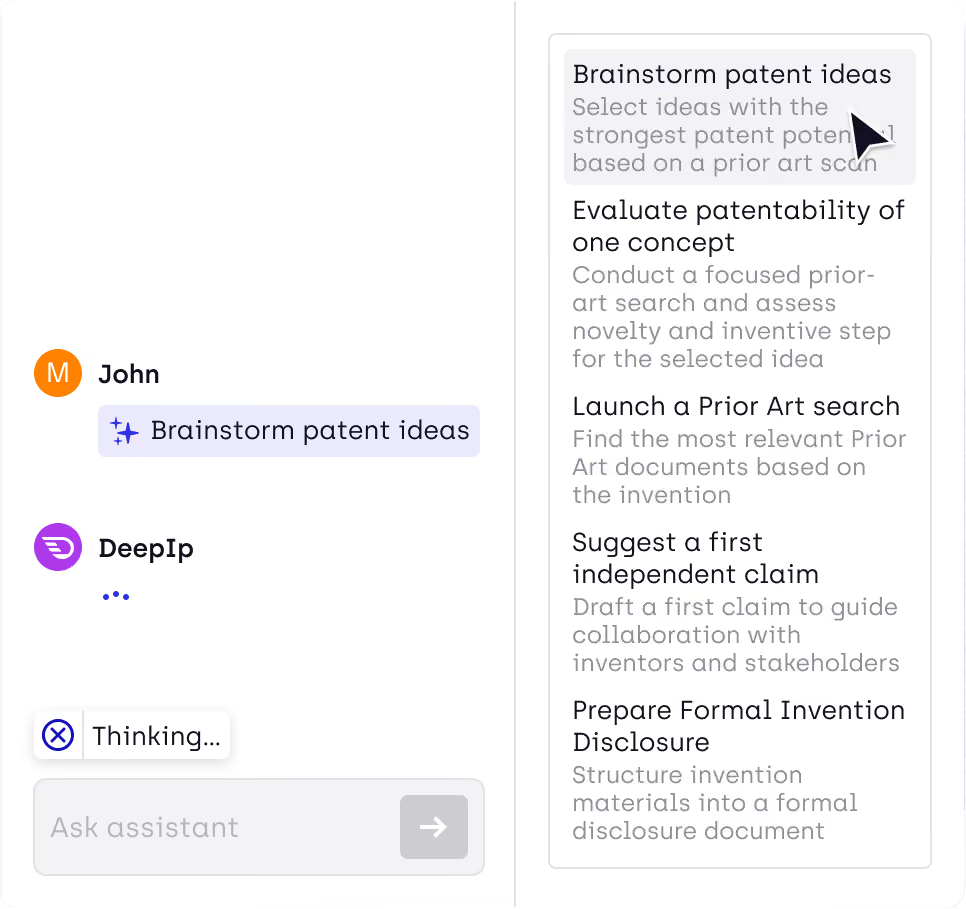
DeepIP supports this stage through its AI patentability and prior art intelligence capabilities, helping teams automatically surface key technical elements from internal documents and R&D narratives—highlighting potentially patentable concepts and pre-structuring disclosure-ready summaries.
Key takeaway:
AI-based invention harvesting strengthens early pipeline visibility across all industries, but the impact is especially significant for R&D-intensive fields like chemistry, biotech, and life sciences—where complex documentation and fast-moving programs make missed inventions particularly costly.
2. AI-Driven Patentability & Prior Art Analysis: From Weeks to Hours
Once an invention is captured, assessing novelty and freedom-to-operate has historically been slow and resource-intensive. AI now accelerates this step dramatically.
A 2025 survey of AI-powered IP management tools shows modern platforms reduce patent search and prior art analysis time by 60-80% compared to traditional Boolean search methods.
Modern AI systems deliver:
- Semantic search capable of uncovering prior art that keyword search misses
- Novelty and similarity scoring to prioritize which disclosures to pursue
- Multilingual, global coverage across patent jurisdictions
- Structured claim charting for examiner-style review
- Quick patentability summaries to support fast decision-making
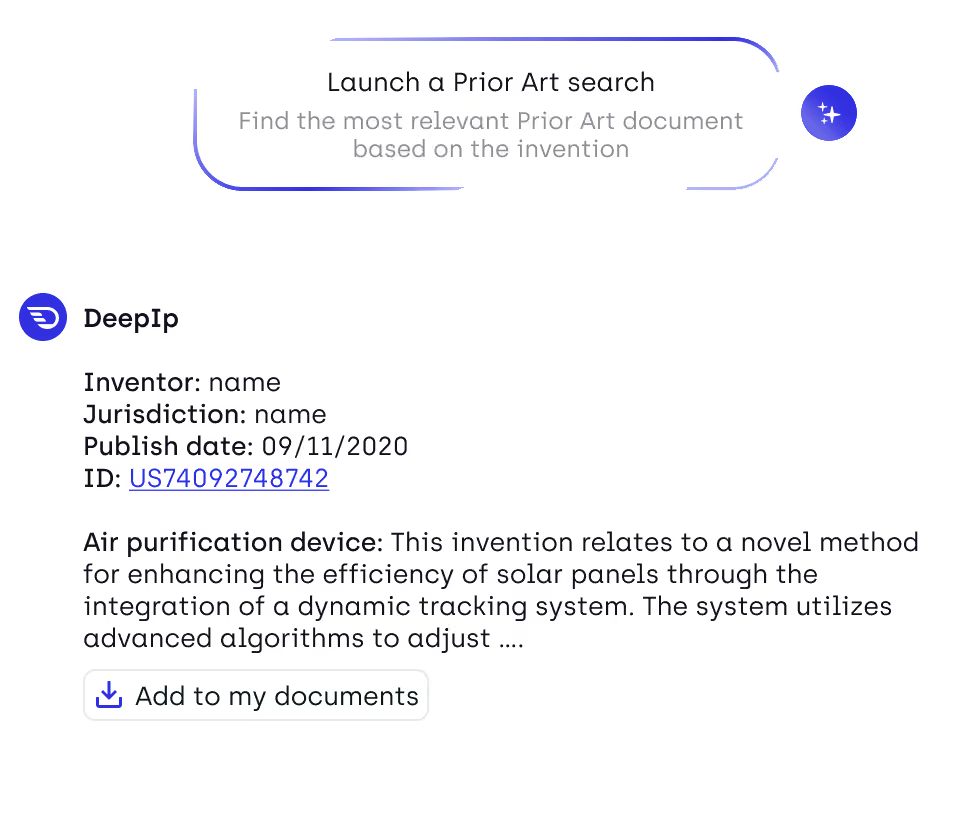
Clients consistently report that DeepIP’s patentability module and AI-assisted prior art search reduce the time spent manually digging for references—giving teams faster visibility into novelty, risk, and filing readiness.
Key takeaway:
Corporate IP teams should adopt semantic, AI-powered patentability tools with global coverage and automated prioritization—not rely solely on manual search systems.
3. Portfolio Pruning and Strategic IP Asset Management at Scale
As patent portfolios expand—particularly in organizations with multiple R&D programs—the cost and complexity of maintenance rise. Not all patents deliver equal strategic value; some become redundant, low-impact, or obsolete.
Industry analyses, such as UnitedLex’s 2025 report, highlight five major areas where AI supports IP asset management, including portfolio optimization, predictive valuation, cost reduction, enforcement risk assessment, and strategic licensing support.
AI now plays a central role in enabling:
- Asset valuation and relevance scoring
- Predictive maintenance and cost forecasting
- Redundancy and obsolescence detection
- Data-driven decisions about pruning or reinvesting
DeepIP clients report that AI-assisted drafting and analysis reduce the manual effort required to prepare and review applications, freeing attorneys to focus on strategic decisions. By streamlining repetitive tasks and improving visibility into application quality, DeepIP helps organizations run more efficient pruning cycles and better prioritize high-value filings.
Key takeaway:
Amid tightening budgets, AI-driven portfolio intelligence allows corporate IP teams to determine what to maintain, license, or abandon—maximizing ROI across complex portfolios.
4. Competitive & Market Intelligence: Seeing Competitor Moves Before They Hit Publications
In fast-moving fields like biotech, life sciences, and chemistry, patent filings often precede scientific publications by months or even years. As a result, patents offer some of the earliest indicators of competitor strategy.
AI-driven IP intelligence platforms can:
- Track competitor filings in real time
- Detect whitespace in crowded markets
- Analyze technology landscapes
- Identify emerging trends
- Monitor citation patterns and legal status changes
A 2025 article noted that such tools help companies “predict filings and stay ahead of IP threats.”
DeepIP’s Agentic Search and AI Reviewer automatically explore related technologies, surface relevant third-party filings, and generate examiner-style analyses. This allows corporate teams to spot competitive shifts early and understand who is working in adjacent technical areas.
Key takeaway:
Continuous, AI-powered monitoring of global patent activity gives corporate IP leaders earlier visibility into competitor movements—informing R&D planning and supporting go-to-market strategy.
5. AI-Assisted Patent Drafting & Review: Bringing More Drafting In-House
For most corporations, patent drafting has historically been outsourced almost entirely to outside counsel due to its time, cost, and expertise demands. But as filings grow—especially in chemistry, biotech, and advanced engineering—the traditional outsourcing model becomes a bottleneck. Drafting cycles slow down, budgets stretch thin, and internal teams struggle to maintain strategic oversight.
AI is shifting this dynamic. Modern AI patent drafting systems enable in-house IP teams to:
- Produce first-draft claims, descriptions, or embodiments internally
- Standardize drafting quality and terminology across product teams
- Accelerate outside counsel review by providing pre-structured drafts
- Reduce back-and-forth cycles on claim clarity, scope, or terminology
- Quickly evaluate or redline drafts received from external firms
This allows corporate teams to reclaim more of the drafting process, reduce costs, and accelerate time-to-filing without compromising accuracy.
DeepIP’s structured drafting workflow is used by corporate teams to generate high-quality first drafts directly from R&D inputs—claims, specifications, and figures—before legal review—and, it's directly embedded into Microsoft Word, making it easy to integrate into existing workflows. This lets them internalize early drafting steps and provide outside counsel with far more complete starting points, reducing review cycles while increasing strategic control over filings.
Key takeaway:
AI drafting tools allow corporations to move from a purely outsourced model to a hybrid one—where in-house teams own more of the drafting strategy and reduce dependence on lengthy external review cycles.
6. Prosecution & Maintenance Automation: Cutting Overhead Without Sacrificing Quality
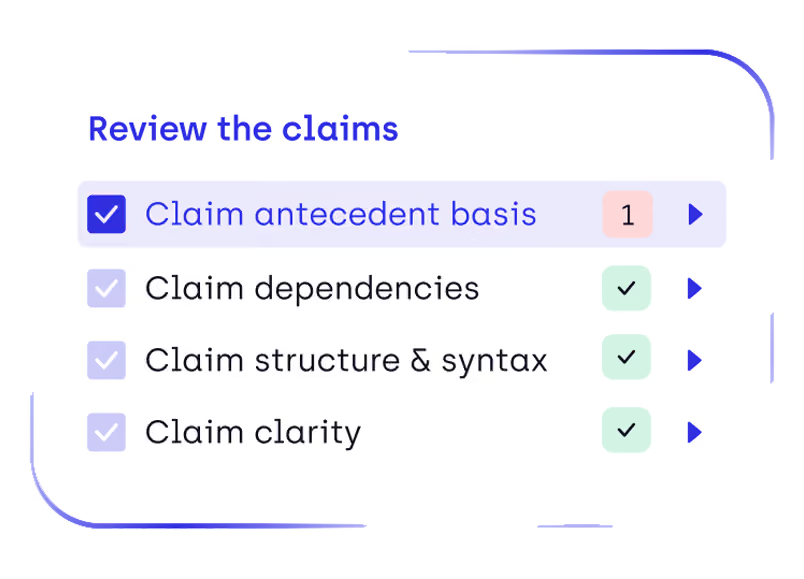
Beyond search and analysis, AI tools now support key prosecution tasks—from drafting specifications and claims to classifying prior art and preparing office-action responses.
Moreover, industry commentary notes that modern AI workflows increasingly unify decision-making, prosecution, and portfolio shaping into a continuous, integrated process.
For organizations with large or global portfolios, AI-driven prosecution support:
- Reduces legal overhead
- Decreases error rates
- Accelerates time-to-patent
- Improves consistency across jurisdictions
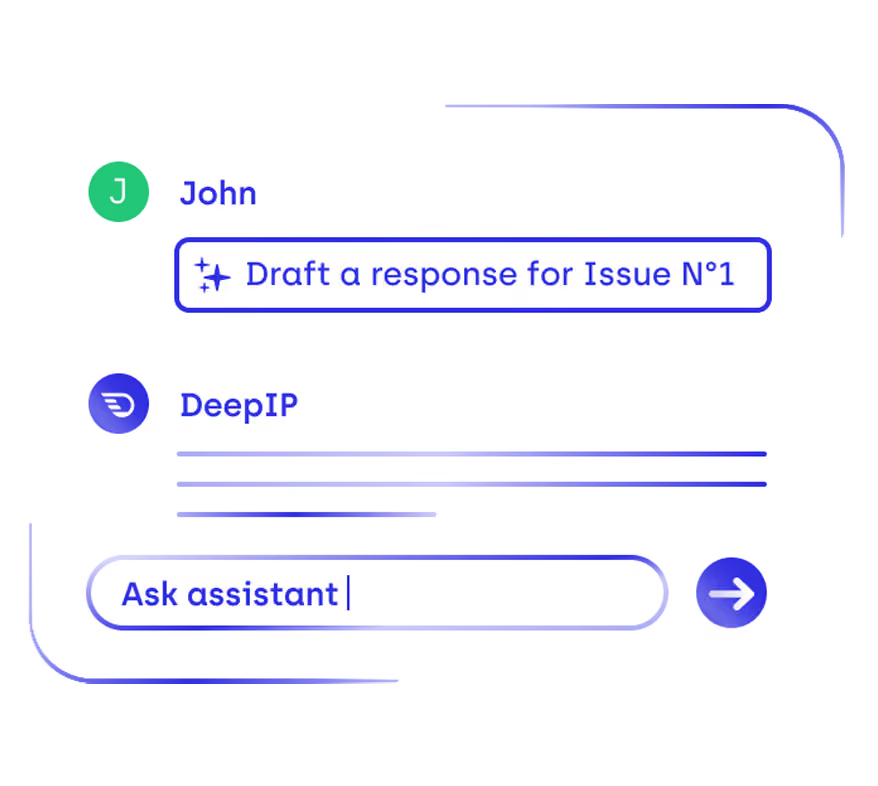
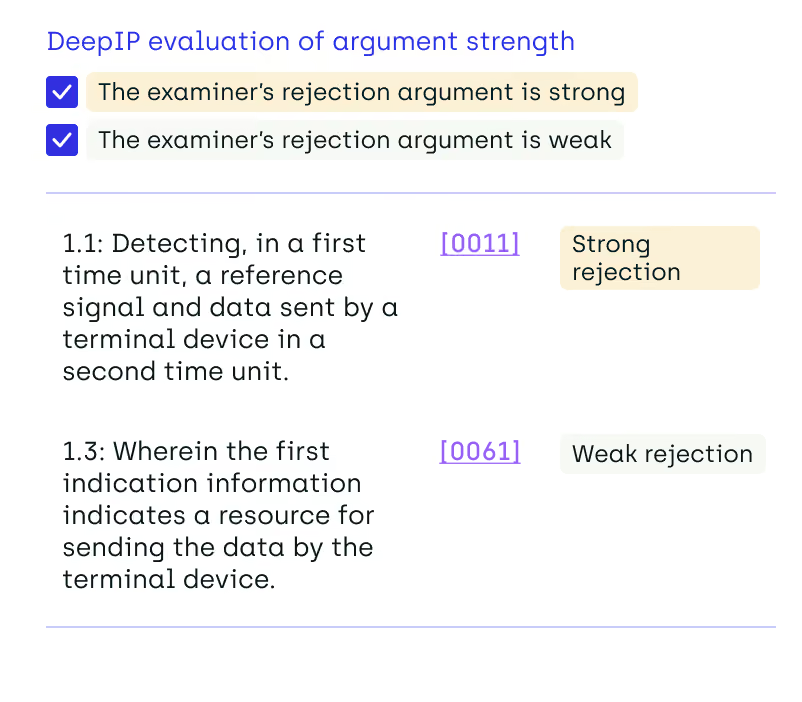
DeepIP’s patent prosecution module automates examiner-style analysis and generates structured office-action response outlines. Corporate teams and external counsel use these capabilities to shorten turnaround times and maintain high-quality prosecution at scale.
Key takeaway:
Companies scaling filings across multiple jurisdictions benefit significantly from AI-assisted prosecution tools that reduce administrative burden while preserving attorney oversight.
7. Litigation, FTO & Invalidity Analysis: Strengthening Risk Management and Early Defense Strategy
As innovation accelerates, litigation and product clearance risks grow. Traditional FTO and invalidity reviews require time-consuming claim parsing, limitation mapping, and exhaustive prior art searches—often across multiple jurisdictions.
AI now reshapes this part of corporate IP strategy by enabling:
- Automated FTO checks across broad patent spaces
- Preliminary invalidity argument generation
- Retrieval of litigation-grade prior art
- Structured claim charts and limitation comparisons
- Rapid early case assessment (ECA)
DeepIP’s FTO and invalidity models break down claim elements, map them to relevant references, and surface targeted prior art—helping teams identify blocking risks earlier and reduce the manual burden of early litigation preparation.
Key takeaway:
AI transforms litigation readiness and risk mitigation into proactive, analytics-driven processes—helping companies anticipate threats, strengthen defensive positions, and accelerate product-clearance decisions.
What a Modern Corporate IP Tech Stack Looks Like (2026)
Here’s a snapshot of what a mature, AI-enabled corporate IP stack looks like in 2026—especially for life sciences, chemistry, and materials-heavy firms:
Why It Matters—Especially for High-Innovation Sectors (Life Sciences, Chemistry, Biotech)
High-innovation industries such as life sciences, chemistry, and biotech face unusually complex IP challenges. R&D cycles are fast, interdisciplinary, and data-heavy, which increases the risk of missed inventions, subtle prior art conflicts, and rising prosecution and litigation exposure. Traditional IP workflows struggle under this pace.
AI directly addresses these pressures by improving early-stage novelty detection, accelerating prior art and competitive analysis, and strengthening portfolio quality through better visibility and decision support. It also enhances readiness for prosecution and litigation by catching issues earlier and providing structured analytical tools that manual review can’t match at scale.
For these sectors, AI doesn’t just improve efficiency—it fundamentally shifts IP from a reactive cost center to a proactive driver of innovation strategy and competitive advantage.
Action Plan for Corporate IP Teams
- Audit workflows to identify bottlenecks across disclosure, search, docketing, maintenance, and monitoring.
- Pilot an AI-enabled tool that offers semantic search, portfolio analytics, and maintenance forecasting.
- Integrate with R&D systems—ELNs, lab reports, design logs—to capture early-stage ideas.
- Use AI-driven scoring to rank inventions based on novelty, commercial relevance, and strategic alignment.
- Prune regularly using dashboards that flag low-value or redundant assets.
- Implement competitive intelligence workflows with global filing alerts and whitespace detection.
- Adopt AI-assisted prosecution support for prior-art analysis, office-action drafting, and claim development.
Conclusion: AI Is No Longer Optional for Corporate IP
By 2026, AI has become the backbone of modern corporate IP. It accelerates invention harvesting, strengthens patentability decisions, streamlines prosecution, sharpens competitive insight, and fortifies litigation defenses.
Organizations that embrace AI gain the clarity, speed, and capacity needed to protect and scale innovation—while keeping costs under control.
For teams still relying on spreadsheets, manual search, or siloed workflows, now is the time to explore an integrated AI IP platform. The difference in speed, coverage, and strategic insight will redefine your IP strategy.
.avif)