Top AI Tools for Patent Attorneys in 2026: A Strategic Guide to Drafting, Search, and Prosecution
.png)

Artificial intelligence is no longer experimental in patent practice. In 2026, AI tools for patent attorneys are increasingly embedded across drafting, prosecution, prior art search, and portfolio strategy. What has changed is not just the availability of AI—but how deeply it now shapes decision-making quality, risk management, and attorney productivity.
For law firms and in-house counsel, the challenge is no longer whether to use AI, but which categories of AI patent software actually deliver defensible outcomes. This guide breaks down the five most impactful types of AI tools used in patent law today, how they are applied in practice, and what to look for when evaluating platforms.
Updated for 2026.
1. AI Patent Drafting Software
What this category does
AI patent drafting software assists attorneys throughout the preparation of patent applications, from invention understanding to claim structuring and specification drafting. Modern tools leverage large language models (LLMs) trained on patent corpora, combined with rule-based legal constraints, to support—not replace—attorney judgment.
Unlike early “autocomplete” tools, current AI drafting assistants focus on structural completeness, internal consistency, and claim logic, which are critical for downstream prosecution and enforcement.
Where it delivers the most value
- Translating raw invention disclosures into structured applications
- Identifying missing technical elements early
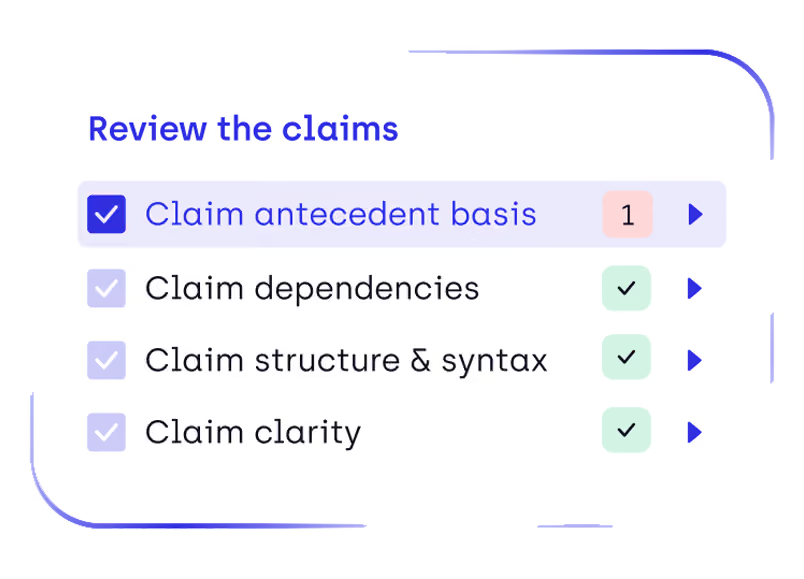
- Improving claim hierarchy and dependency logic
- Maintaining stylistic and terminological consistency across long specifications
Key capabilities to look for
- Invention summarization and technical decomposition
- Claim suggestion with dependency awareness
- Cross-section consistency checks
- Jurisdiction-aware formatting and compliance
Why it matters in 2026:
Drafting speed alone is no longer the differentiator. High-performing teams use AI drafting tools to reduce rework during prosecution and improve first office action outcomes.
2. AI Office Action and Patent Prosecution Tools
What this category does
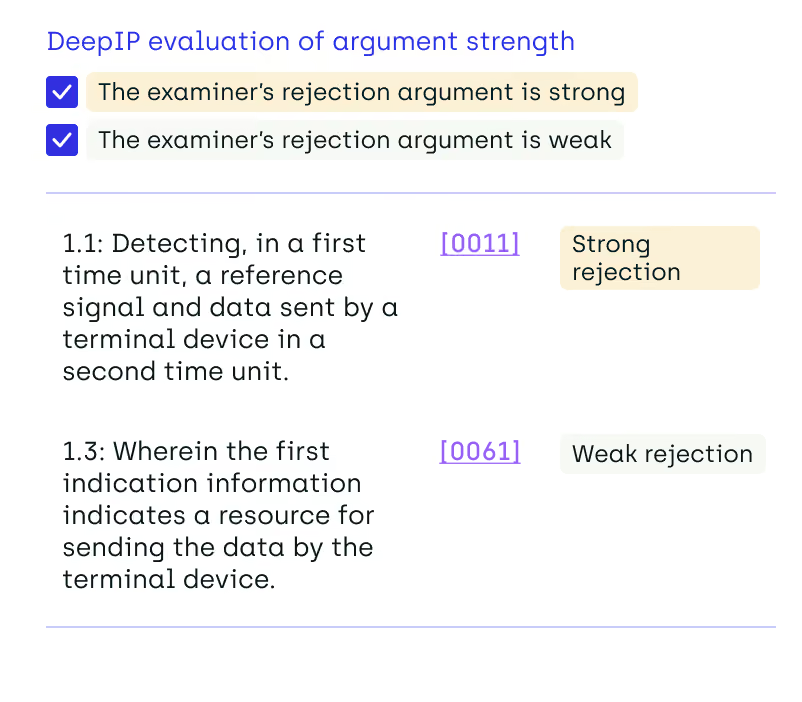
AI patent prosecution tools support the review and response to office actions by simulating examiner reasoning, extracting objections, and highlighting claim-prior art relationships. These tools significantly reduce the time spent parsing long office actions while improving argument focus.
Rather than generating generic rebuttals, best-in-class platforms emphasize examiner-aligned analysis and response quality.
Typical use cases
- Rapid understanding of examiner objections
- Comparison of claims against cited prior art
- Identification of amendment risks
- Drafting structured, defensible responses
Key capabilities to look for
- Automated objection and rejection extraction
- Claim charting against cited references
- Examiner-style reasoning simulation
- Amendment impact analysis
Why it matters in 2026:
As prosecution timelines tighten, AI office action response tools help teams standardize quality across firms and jurisdictions, not just accelerate drafting.
3. AI Prior Art Search Tools
What this category does
AI prior art search tools use semantic search, embeddings, and increasingly structure-aware models (for chemistry, biotech, and complex systems) to identify relevant disclosures across patents and non-patent literature.
These tools move beyond keyword matching to surface conceptual and technical similarity, which is essential for novelty and inventive step analysis.
Typical use cases
- Patentability assessments
- Pre-filing risk analysis
- Landscape and white-space exploration
- Invalidity and freedom-to-operate (FTO) groundwork
Key capabilities to look for
- Semantic and hybrid search (keyword + concept)
- Multilingual coverage
- Non-patent literature integration
- Result explainability and relevance scoring
Why it matters in 2026:
The competitive advantage lies not in finding more prior art, but in identifying the right art early, before claims are locked in.
4. AI Patent Analytics and Competitive Intelligence Platforms
What this category does
Patent analytics platforms apply AI to large-scale patent datasets to reveal technology trends, competitor strategies, and portfolio strengths or weaknesses. These tools are increasingly used by both law firms and corporate IP teams to inform filing, licensing, and litigation strategy.
Typical use cases
- Technology trend analysis
- Competitor monitoring
- Portfolio benchmarking
- Filing and jurisdiction strategy
Key capabilities to look for
- Visual analytics and clustering
- Assignee normalization
- Technology classification accuracy
- Time-series and trend detection
Why it matters in 2026:
Patent strategy is no longer retrospective. AI analytics enable forward-looking portfolio decisions, especially in fast-moving innovation sectors.
5. Automated Patent Classification and Portfolio Management Tools
What this category does
Automated classification tools use AI to categorize patents by technology, application, or strategic relevance. When combined with portfolio intelligence, they support large-scale portfolio organization, pruning, and governance.
Typical use cases
- Portfolio clean-up and rationalization
- Internal knowledge management
- Reporting and governance
- M&A and due diligence preparation
Key capabilities to look for
- High-precision classification models
- Custom taxonomy support
- Portfolio-level analytics
- Explainable categorization logic
Why it matters in 2026:
As portfolios grow, manual classification becomes a bottleneck. AI enables continuous, consistent portfolio insight rather than periodic audits.
How to Evaluate AI Tools for Patent Attorneys
Across all categories, high-performing IP teams increasingly evaluate AI patent tools against four shared criteria:
- Legal reliability: Does the tool align with patent law reasoning, not generic text generation?
- Explainability: Can attorneys understand why a result is produced?
- Workflow integration: Does it fit existing drafting, prosecution, and review processes?
- Security and data governance: Are confidentiality, data segregation, and compliance enterprise-grade?
Tools that fail on any of these dimensions rarely scale beyond pilot use.
Conclusion: AI as Core Patent Infrastructure
AI has become core infrastructure for modern patent practice. From AI patent drafting software to office action response tools and portfolio intelligence platforms, the most effective solutions augment attorney expertise rather than replace it.
For patent attorneys and IP leaders, the goal is not automation for its own sake, but better outcomes with lower risk and higher consistency. Firms and corporate teams that treat AI as a strategic capability—rather than a novelty—will define the next era of patent practice.
Frequently Asked Questions About AI Tools for Patent Attorneys (2026)
What are the most important AI tools for patent attorneys in 2026?
The five most impactful categories are:
- AI patent drafting software
- AI office action response tools
- AI prior art search platforms
- Patent analytics and competitive intelligence tools
- Automated portfolio classification and management systems
Together, these tools support the full patent lifecycle—from invention intake to portfolio strategy.
What is the best AI patent drafting software in 2026?
The best AI patent drafting software prioritizes structural completeness, claim logic, and prosecution-readiness rather than simple text generation. Key differentiators include claim dependency awareness, cross-section consistency checks, and jurisdiction-aware formatting.
High-performing teams evaluate drafting tools based on whether they reduce downstream prosecution risk—not just drafting time.
How do AI office action response tools improve prosecution outcomes?
AI office action tools extract examiner objections, map claims against cited prior art, and simulate examiner-style reasoning. This helps attorneys:
- Quickly understand rejection logic
- Identify amendment risks
- Draft more structured and defensible responses
In 2026, the strongest platforms emphasize argument quality and consistency across teams and jurisdictions.
How are AI prior art search tools different from traditional search?
AI prior art search tools use semantic search and embedding-based similarity rather than relying solely on keywords. This allows them to surface conceptually similar disclosures—even when terminology differs.
Advanced tools also integrate:
- Multilingual search
- Non-patent literature databases
- Structure-aware models for chemistry and biotech
The strategic advantage lies in identifying the right prior art early, before claims are finalized.
Can AI tools replace patent attorneys?
No. In 2026, AI tools are designed to augment attorney expertise, not replace it. The most effective systems improve analysis quality, surface risk earlier, and standardize workflows—but legal judgment remains essential.
How do corporate IP teams evaluate AI patent software?
Corporate IP teams typically assess tools across four criteria:
- Legal reliability (alignment with patent law reasoning)
- Explainability (transparent outputs and traceable logic)
- Workflow integration (fit within drafting and prosecution processes)
- Security and governance (enterprise-grade confidentiality controls)
Tools that lack explainability or governance rarely move beyond pilot deployments.
What role does AI play in patent portfolio management?
AI portfolio tools support:
- Automated patent classification
- Portfolio pruning and rationalization
- Trend analysis and competitive benchmarking
- Governance and reporting
As portfolios scale, AI enables continuous oversight instead of periodic manual audits.
Are AI patent tools secure for confidential invention data?
Enterprise-grade AI patent platforms implement strict data segregation, encryption, and compliance controls. When evaluating vendors, IP leaders should assess:
- Data retention policies
- Model training transparency
- Cloud security certifications
- Access control mechanisms
Security and governance are as critical as technical performance.
.avif)