Why a successful AI pilot is not an adopted practice


The third panel started from something nobody disputed. Pilots work. Turning a pilot into a firm-wide habit mostly does not.
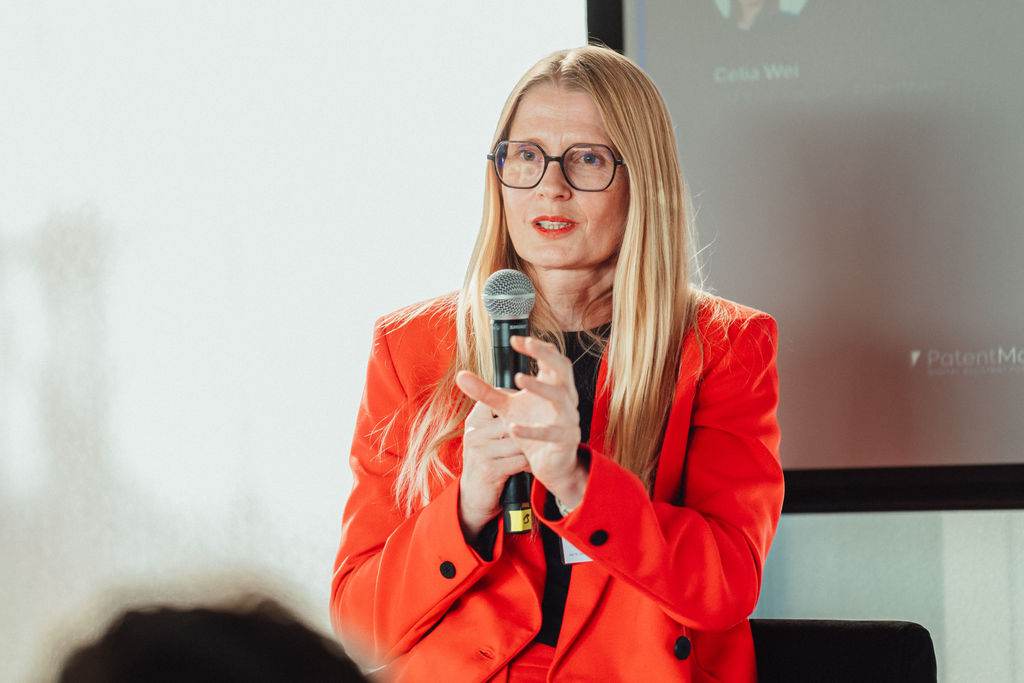
Celia Wei, as moderator, had spent the preparation calls collecting the same observation from every side of the market: the technology stopped being the hard part some time ago. What decides the outcome now is organizational, and that is a different discipline. She put the gap to Marc-Michael Barf, Director Corporate Patents at Infineon, Daniel Werner, partner at Bardehle Pagenberg, and Ina Schreiber, partner at Plasseraud IP.
Pilots succeed for the reasons adoption fails
Barf's answer was that pilots work for two reasons, and neither survives at scale:
- The technology is already good enough for a decent number of use cases.
- A pilot runs with a small group of highly motivated people.
Take it firm-wide and the second reason disappears. You now have to bring along the reluctant and the less technically confident, and giving them access is only the start, because whatever you teach them today is out of date within months. What you actually need is people who keep up on their own.
Data comes next. A model works on what you feed it, and most organizations are sitting on years of material that no longer reflects how they work: superseded templates, abandoned practice, documents that contradict each other. That history does not sit quietly in the background but shapes the output.
Then processes, and Barf was firm that laying an AI layer over the existing ones does not work. They have to be rethought, then standardized, because a bespoke workflow for every individual is not something an organization can maintain.
He also drew a line between corporate departments and firms. Corporates started earlier, for security reasons: large companies gave employees internal AI platforms precisely so they would stop putting company data into outside tools, and that gave curious people somewhere to experiment. What they get in exchange is inertia, long conversations with IT, and a budget fight against departments where AI has more obvious leverage.
Firms started later, and Barf acknowledged that AI puts an awkward question to any model built on billable hours. But they are smaller and can decide faster, and he hopes they use that.
Asked whether he expects his own outside counsel to use AI, he was careful. He would like them to, and stops short of expecting it, because approval takes two parties and his own risk assessments are still running. Once the data security work is settled, he does expect it, along with routine work getting faster and eventually cheaper without quality falling. What it frees up goes into claim strategy and litigation exposure, where quality is actually decided.
Juniors adopt, seniors resist. The assumption that turned out to be wrong
In December, Schreiber would have agreed with that sentence without hesitating. But in January her firm surveyed its attorneys and engineers on what they use AI for and how often. The result came back inverted: the senior attorneys use it most frequently, and across the widest range of tasks.
The explanation is expertise. Seniors were slower to start, and that much held. But a senior attorney knows what a good claim set looks like, so the first time the tool produced one, they recognized it on sight and knew exactly what to do with it. From there adoption moved fast, because they were never learning the tool. They were checking it against a standard they already carry. Juniors are still building that standard. They test more, rely on it less, and use it less often, because they cannot yet tell at a glance whether what came back is any good.
Werner's firm went the other way, and the reason matters more than the contrast. Bardehle started in 2023, early enough that context windows could not hold a full document. Rather than expose the whole firm to a poor first experience that would have cost years of goodwill, they kept it to their most technically confident people and worked out what the models of the day could genuinely do well. Adoption spread upward from trainees and junior associates, who were willing to learn the prompting rules nobody discusses anymore. Experienced colleagues joined as the models improved.
Two firms, opposite curves, neither explained by generational attitude. What separates them is when they started, and how capable the models were on the day people formed their first impression.
Werner described the change in the work itself as moving up a layer of abstraction. You call the shots rather than execute them. The question becomes what you would tell a colleague to do to move the case forward for you, and then you hand that over, read what comes back, and decide again.
Schreiber described the same shift as ping pong with an unusually responsive sparring partner. The attorneys who find it hardest are the ones who learned to work in long blocks: one file, morning to evening, a finished draft at the end. Moving in short exchanges asks for a different kind of attention, not a lesser one.
Barf named the part legal professionals like least. You have to be willing to release something that is not right the first time and improve it from there. Standards do not drop. What changes is the timing, because an implementation that takes months arrives obsolete.
Where judgment comes from now
If juniors work with AI from their first day, and the previous generation built judgment by doing the analysis unaided, where does that judgment come from now? Firms train the profession's future partners and in-house departments recruit from them, so nobody could treat it as someone else's problem.
Werner has a protocol. AI is in the toolbox and pretending otherwise is the wrong approach, but trainees need their own reasoning intact to pass their exams. So they use it on the tedious side, and to get up to speed on unfamiliar technology, since everyone holds a doctorate in something and nobody in everything. The strategic calls stay theirs, and he holds them to it by asking them to walk through the reasoning end to end. Whether the thinking was their own becomes obvious within a minute. His argument is that this beats banning AI for a year, because trainees reach the decision-making part of the work earlier than they used to.
Schreiber was more candid about where the profession stands. She would not claim her firm has solved it, and said that claiming otherwise would be a lie. They set tasks, watch whether anything is actually being learned, and adjust. Occasionally a trainee arrives somewhere nobody senior would have thought to go.
Barf would give new joiners a short stretch without AI, and only a short one, because the work is moving from producing text to reviewing and refining it, and that is what they need to be good at.
One argument from the floor deserves to travel further than the room. IT departments treat AI as a risk to be contained, and the case that shifts the conversation is that not using it carries a risk of its own: work of lower quality than it could be. Put to a chief information security officer in those terms, that argument is what unlocked approval in at least one department.
Werner's closing advice was to go find the jagged frontier, Ethan Mollick's term for the fact that you cannot predict what a model will be good at until you try it. Apply it responsibly to what you do daily and map the boundaries yourself.
Barf's was the sentence to keep. Do not define yourself by the tasks AI is going to automate. The good patent attorneys of tomorrow will not be the ones producing the most text. They will be the ones who ask the right questions, exercise judgment, give strategic advice, and connect IP to business value.
.png)