Who captures the value when AI gives patent teams their time back
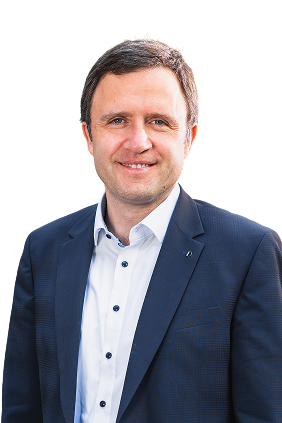
Matthias Hofmann
EP & German Patent Attorney, Partner at Boehmert&Boehmert · Founder, PatentMaker a DeepIP company
Panel 1 opened on a prediction Matthias Hofmann first heard during his doctoral research, from his supervisor Bernhard Schölkopf: patent attorneys will likely be replaced by AI before truck drivers.
The argument is not that patent work is simple. It is about where the work happens. A truck driver operates in the physical world, reading messy inputs in real time, where one small error can kill someone. Patent professionals receive text and produce text, end to end, in the medium machines already handle best. That is what makes the profession exposed, and it is a strange thing to hear said out loud in a room full of people who do it.
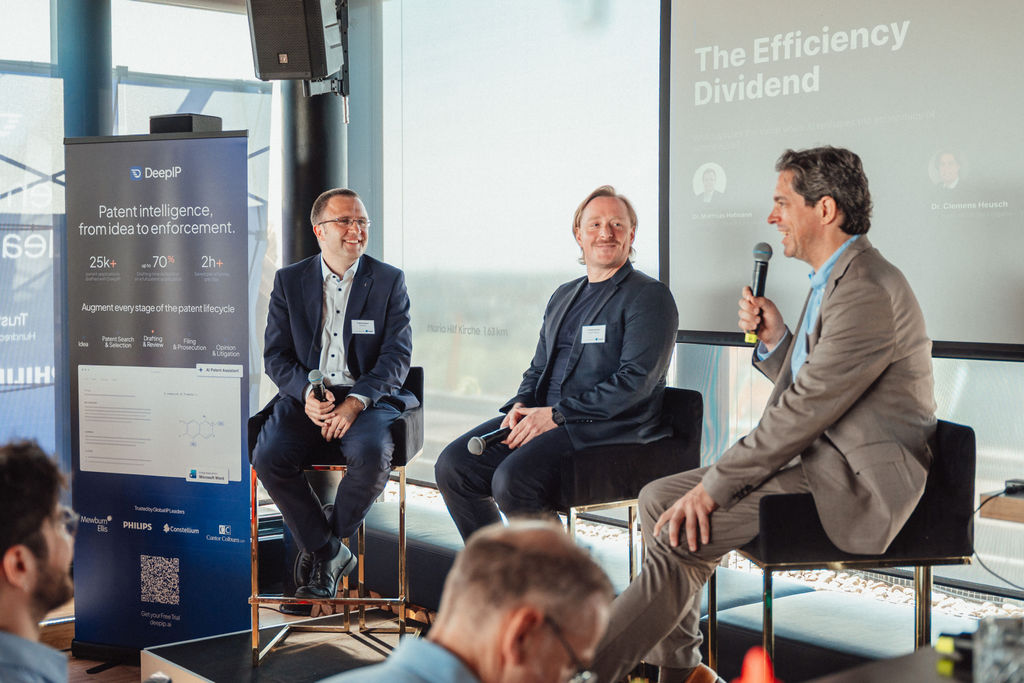
Hofmann, co-founder of PatentMaker and now with DeepIP, spent the next hour putting that forecast to two people living the transition from opposite sides. Clemens Heusch, inside a corporate IP department at Nokia. Nikolaus Buchheim, partner at Bardehle Pagenberg, inside a firm. One question ran under every exchange: the time is being saved, so who ends up with it?
The gain never sits still
Heusch started 200 years back. Before industrialization, roughly 90% of the German population worked in agriculture. Today it is about 2%. Industrialization, digitalization, optimization, now AI. Each wave changed the work without removing it. A colleague of his puts the current version plainly: AI will not take your job, but if you do not use AI, that will take your job.
Heusch says Nokia has roughly quadrupled its annual first filings over two years. He was unsentimental about why. 6G standards are freezing, which is when the inventions that matter get filed. Each generation also multiplies the families in play, from around 10,000 for 2G to something past 200,000 for 5G. And at a negotiation table, a portfolio of 100 patents argued to be worth more than a rival's 1,000 still leaves you the net payer.
The cost side never relaxes. Hit a revenue target and the next one is higher. Cut spend by 10% and next year asks for another 10%. Since attorneys do not get cheaper, the only lever left is fewer billable hours per matter.
Hofmann pushed on where that leads. If AI drafts and inventors review, does an in-house team still need as much outside counsel? Heusch rejected the framing of control and described firms as project teams, then described what is actually happening: invoices reviewed with AI, disclosures enriched before they reach the firm.
Then he offered a precedent from inside the profession. Manual translation once cost €10,000. Machine translation now approaches the same quality at no cost, and translation teams have largely disappeared with it. Nobody chose that outcome. The gain went to whoever was positioned to take it, which is what happens when a profession gets faster without deciding what the speed is for.
Hofmann drew the conclusion he had come to himself. With filings rising and each one growing more complex, doing this work without AI will simply stop being possible.
Where the recovered time actually goes
Buchheim described his own case. Around 80% of his work used to sit outside the strategic core. That share now goes to inventors, to iteration between a first claim and a better one, to small portfolios with deliberately overlapping scopes built around a single development program, with US prosecution anticipated from the start. More patents, but his emphasis fell on better ones.
Whether that translates into pressure on firms depends on what a firm has been selling. Where the offer was volume drafting priced per unit, he expects the economics to move, because a small team working well with AI now covers ground that used to need a large one. Where the offer is strategy, the pressure lands somewhere else.
Hiring has already shifted. PhD-level candidates once spent their first years on office action responses, building reflexes through repetition. That training ground is disappearing, so they now get work matched to what they can already do, such as building a lab setup to prove infringement.
Heusch expects firm structure to follow. The old arithmetic rewarded size, and leverage ratios were built on that logic. He expects smaller, tighter teams instead. Leverage on AI rather than on headcount.
Hofmann named the part nobody enjoys. Germany trained around 200 patent attorney candidates a year when he started, and about half that today, with a large cohort retiring in the 2030s. The profession contracts either way. Both panelists pushed back on the pessimism, and Buchheim added the observation that has held so far: the main beneficiaries are clients, who get better quality and higher win rates for the same budget.
What the room pushed on
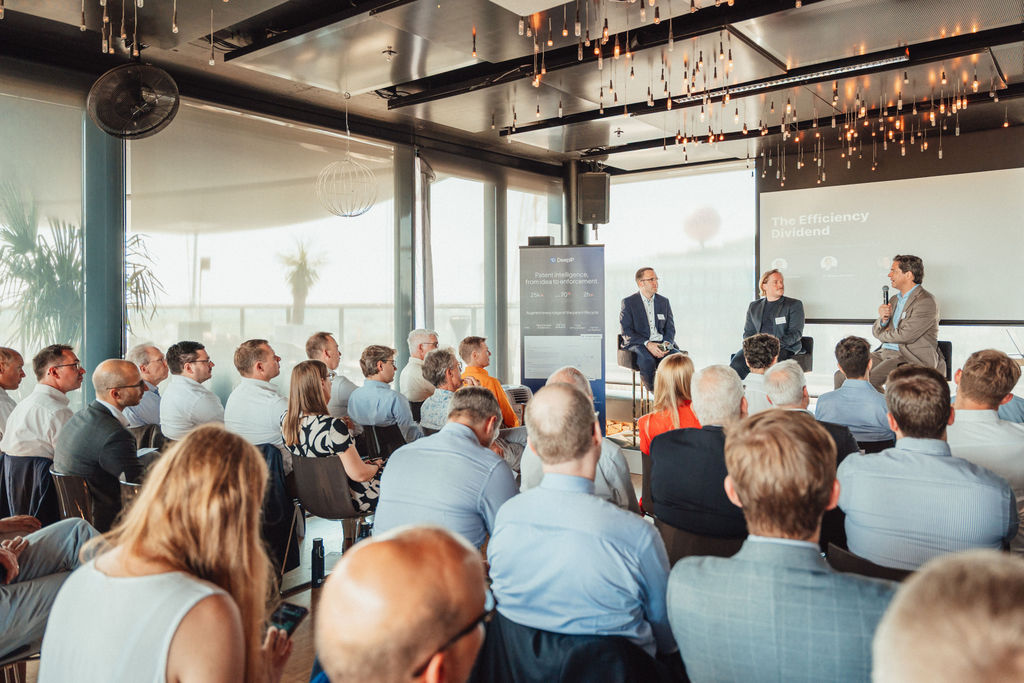
The audience did not ask about tools. All three questions went at quality.
The first asked whether AI can judge work product, not just cost. Heusch knew of no tool doing it credibly. Hofmann, who reviews associate work himself, said he finds he does not use AI for it, because juniors increasingly produce with AI and checking AI with AI makes little sense to him. Buchheim's counter produced the sharpest exchange of the evening: the AI-augmented human does the quality control. He uses AI throughout and never alone, then turns each review into a short training document so the reasoning reaches the junior who needs it. The time saved goes back into the people.
The second came from pharma, where a single patent can carry a product, and where time saved on drafting tends to be reinvested in validation. Is Nokia doing that, or playing the numbers? Buchheim's answer was that it is adjustable. More filings, deeper quality, or divisional claim sets prepared in advance. Nothing in the technology decides it.
The third was the one nobody has answered. If firms, opponents, owners, and offices all run AI, does the tool become the only difference left? Identical prompts against identical models produce identical results, Buchheim said, which is precisely why the work still matters. He runs drafting and challenge as separate systems with different context, one writing and one taking the role of examiner, judge, and client. One or two iterations improve a draft. Twenty saturate it, then degrade it. The attorney, he said, is not only in the loop. You have to be in the know, and you have to be in the lead.
Hofmann expects two AI systems to end up negotiating with each other sooner than most people think. He also expects the decision that matters, in oral proceedings and everywhere it counts, to stay with a person for a long time yet.
But the outcome he came back to was a different one. What he finds hard about the current system is the individual inventor who arrives with an idea and discovers what protection costs and how long it takes. For that person, the system has quietly not been available. If efficiency reaches far enough, protection becomes available to people who are priced out of it today. That is the version of the dividend worth wanting, and it is the one that does not arrive on its own: patent offices have to get faster and cheaper too, or the gains stop at the office door. Until then, the dividend stays wherever each practice decides to put it, and the ones who decide nothing will find the decision made for them.
.avif)